
An email list records who once gave you an address. It does not tell you whether each address still works today.
People change jobs, companies change domains, and signup forms collect typing mistakes. A list that looked fine when you built it can drift quietly until a campaign returns a wave of bounces.
Email list validation is the practice of checking addresses before you send, so you can separate the ones that look deliverable from the ones that are broken, risky, or uncertain. This article explains why that matters and what validation can and cannot tell you.
What email list validation checks
Validation looks at each address from several angles without sending it a message:
- Syntax: is the address formed correctly, or does it contain a typo such as a missing
@or a misspelled domain? - Domain and mail routing: does the domain exist, and does it publish mail servers that can accept messages?
- Mail server response: when asked about the mailbox, does the receiving server indicate that it exists, reject it, or accept every address?
- Categories: is the address role-based, disposable, from a free provider, or associated with patterns that deserve a closer look?
The result is a set of findings for each address, such as deliverable, undeliverable, catch-all, or unknown. For a closer look at each step, read how to verify an email address without sending an email.
Why it matters before a campaign
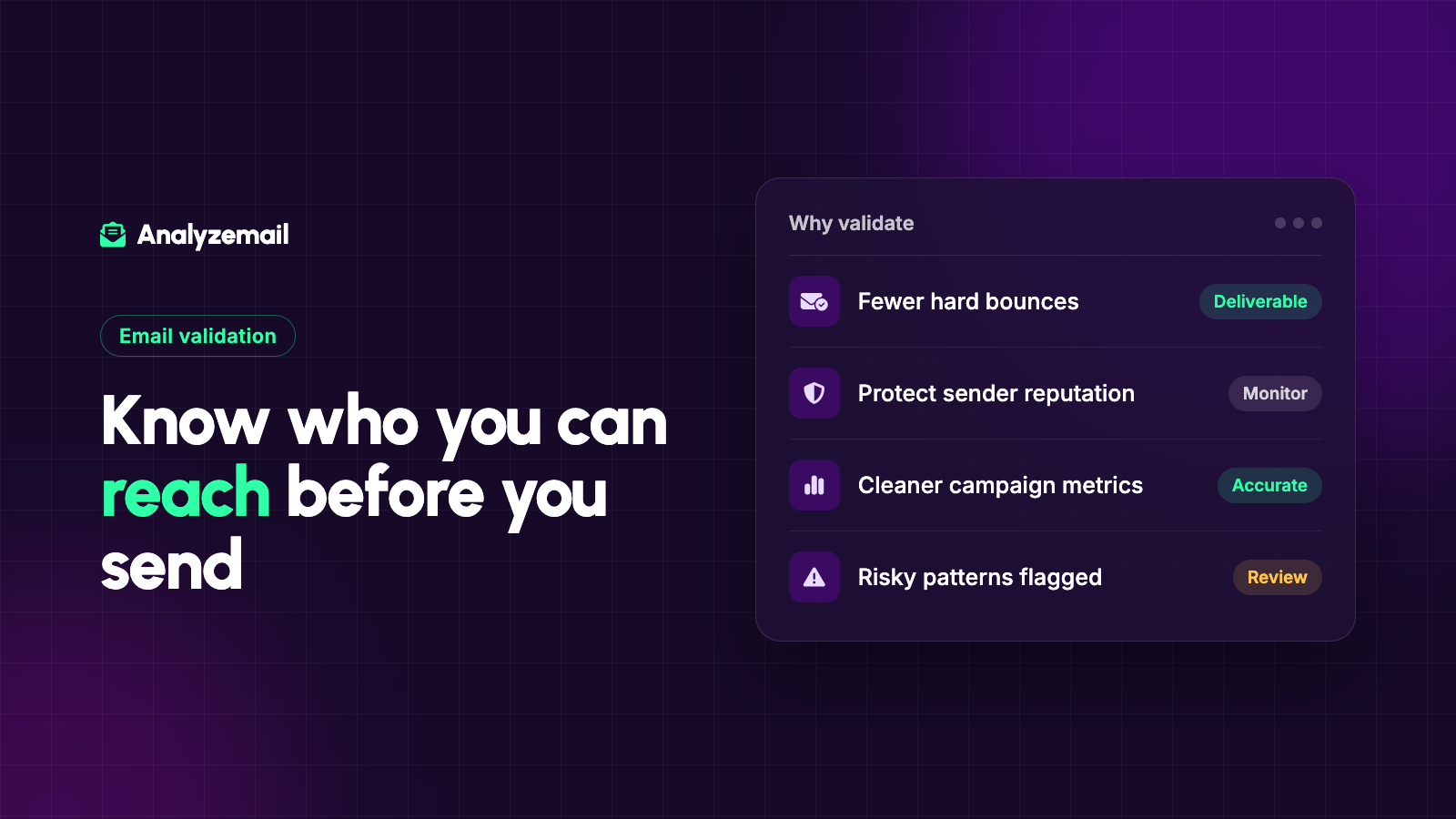
Fewer avoidable bounces
Hard bounces from addresses that no longer exist are one of the most preventable problems in email marketing. Finding those addresses before a send means your email platform does not have to discover them for you, one failed delivery at a time.
A healthier sender reputation
Mailbox providers watch how senders behave. Repeatedly sending to addresses that do not exist is one of the signals that can suggest poor list management. There is no single bounce rate that is safe for every sender, so the practical goal is to keep address-related failures low and watch for changes against your own normal results. Google's sender guidelines are a useful reference for what large providers expect.
Metrics you can trust
Invalid addresses inflate the size of your audience and dilute every rate calculated from it. Removing them before the send makes it easier to judge whether a campaign actually performed well or poorly.
Less spent on contacts who cannot receive mail
Many email platforms charge by contact count or send volume. Suppressing addresses that cannot receive mail keeps you from paying to store and message them.
Earlier warning about bad sources
When one signup form, event import, or purchased spreadsheet produces most of the problems, validation results make that pattern visible. Fixing the source prevents the same defects from coming back.
What validation cannot tell you
Validation answers a technical question: can this address plausibly receive email right now? It does not answer several others that matter just as much.
- Interest and permission. A working mailbox says nothing about whether the person wants your email. Subscription status and consent still come from your own records.
- Inbox placement. Content, authentication, sending history, and recipient engagement all influence whether a message reaches the inbox or the spam folder. No address check can guarantee placement.
- Certainty on every domain. Some servers accept every address (catch-all) or decline to answer. Those results are uncertain and need a decision rather than an automatic keep or delete. See how to handle catch-all email addresses.
- The future. A result describes what was found at the time of the check. An address that is invalid today may be created later, and a valid one may be closed next month, so older results should be refreshed.
Checks for risky patterns, such as addresses that resemble known spam traps or temporary inboxes, are signals worth reviewing. They reduce risk; they are not complete protection.
Prevent problems at the point of collection
Validation works best alongside good collection habits:
- Use a confirmed opt-in step for signups, so the subscriber proves the address works and that they asked to hear from you.
- Check addresses in real time on forms, so typos such as
gmail.coomare caught before they are saved. - Record where and when each contact joined, so you can judge older records later.
- Keep unsubscribes and suppressions separate from validation results, and never re-add someone who opted out because their address tested as valid.
When to validate
Validate after importing contacts from another system, before emailing a list that has been dormant for months, when bounce rates rise above your usual level, and before a campaign where deliverability matters most. A regular schedule helps, but your own results are the best guide to how often your list changes.
Where to go next
Understanding why validation matters is the first step. The practical work of reviewing results, handling uncertain addresses, and preserving subscription history is covered step by step in the email list cleaning guide.
When you are ready to check a list, create an Analyzemail account and upload a CSV or TXT file, or connect one of the supported email platforms.